Thursday, January 31, 2008

Juno


Last night I finally saw Juno, Roger Ebert's favorite film of 2007 and recipient of four Oscar nominations, which has as its center the story of an unplanned pregnancy and the people affected by it. The protagonist, Juno MacGuff, played by Ellen Page in one of those so-good-she's-either-brilliant-or-really-like-that-in-real-life performances, is a misfit attracted to her male mirror image. Wiser beyond her years, slightly jaded by life and negotiating the pitfalls of the high school psychological assault course, she responds to her pregnancy by initially seeking an abortion – and the nonchalance with which she is treated is the only thing sadder than the unthinking speed with which she makes the decision. She is greeted by a lone protestor – the sole representative of institutional Christianity in the movie – as young as her, who, while a welcome change from the angry fundamentalist stereotype, may know as little about adult life as Juno does about the experience of pregnancy she's about to have. But something unsettles Juno, and she is unable to go through with the termination. Instead, she plans to have the child and help a couple seeking to adopt.

And that's it – the rest of the film is a deceptively simple story, taking Juno through the following months, her relationship with family, her best friend, and Paulie Bleeker – the dude she hung out with a little too late one night. There's not much to the tale at first glance, but I found the way in which it is told (by writer Diablo Cody and director Jason Reitman – son of Ivan, who brought us Ghostbusters and the wonderful presidential satire Dave) – so utterly beguiling that by the time the film was over I wanted to go straight back to the start to rediscover these characters all over again.

Click here to continue reading this post on the God's Politics blog.

Thursday, January 17, 2008

Sweeney Todd and the spiral of violence


Tim Burton's striking and gruesome film adaptation of Stephen Sondheim's musical 'Sweeney Todd' made me feel alternately impressed by Johnny Depp's singing talent and wince at the violence. The story of a 19th century barber who avenges the loss of his wife and daughter by providing the closest shave ever to a litany of customers including the judge who caused his pain left me preoccupied by thoughts closer to home.

If the film is trying to make a serious point, it is that Sweeney's spiral of violence never ends. The previous night I had attended a meeting of the Consultative Group on the Past – a body established by the UK Government to examine methods of helping the people of Northern Ireland to address the legacy of our own violent recent history. Two things were clear from the comments made at this meeting by members of the public: first, that the levels of genuine sorrow in this society are unfathomable – families ripped apart, minds taken to the edge of destruction, small communities shattered. This is real, and not interpretation. Second, we often lack the ability to empathise with the pain of the 'other' community. It is all too easy to see 'our' pain as exclusive, and to become blind to the suffering of the community on the other side of a political divide.
Continue reading this post on the God's Politics blog.

i'm not there


there's a degree to which there could be no other title for a bob dylan biopic than 'i'm not there', todd haynes' never less than intriguing take on the life of the man who either represents dedication to hiding greater than any other artist, or reveals all there is to know in his music.

it's a very smart idea to have six actors play characters inspired by the dylan myth; something feels entirely right about having a young black kid, a woman, and richard gere all stand in for different aspects/eras/stories from his life. the film's stunning design - image and sound - conceal a deceptively simple core: nobody knows the real dylan, so maybe there's no real dylan there at all, or, more likely, maybe he is everything we want him to be.

i found myself checking in and out of the movie - i felt it could do with a little tightening, but then again, perhaps its looseness is the point - though it's undeniably thrilling in places. when the 'real' bob shows up in the last moments of the film, in archive footage playing his harmonica, i had the strangest experience: i've never been that interested in bob dylan as a person, though of course some of the music is unrepeatably marvellous. but after a couple of hours of mining the potential pasts of this keystone cultural figure, seeing his 'real' face, hearing his 'real' music was an emotional grace note to compare with the films that make us all cry.

Monday, January 14, 2008

youth without youth


i'm returning to writing about film after j o'd's funeral, partly because there was nothing he and i enjoyed more than a rant about the movies. we would have had a long whiskey-fuelled argument about this one:

francis coppola has thankfully returned to actually directing films rather than simply paying other people to do so; he has finally sorted out his finances with a pretty magnificent vineyard business; and with his american zoetrope magazine gives a heck of a lot back to the kind of people whom i guess remind him of himself when he was younger - people who want to do nothing so much as tell stories in the cinema.

it's over ten years since his last film, and in that time he has tried and failed to mount an enormous film with an enormous name - 'megalopolis' - what would have probably been a sci-fi amazement; but in the past couple of years he turned his attention to the romanian philosopher and cultural theorist mircea eliade, and specifically his novella 'youth without youth', a story of a professor determined to find the original language of the human species, and who is led on a mysterious journey when being struck by lightning leads him to regress into his own youth.

some critics have suggested that this material would have made a great science fiction thriller, but thank god coppola decided to let his inner avant gardist out of the box. for his film of 'youth without youth' is more akin to a david lynch movie than the linear stories beloved by populist directors, and in that respect, has more to say. and while 'youth without youth' is a bit of a mess - it's alternately incredibly boring and capable of stunning beauty - it is also clearly the work of the man who made 'apocalypse now', 'the conversation', and particularly 'the godfather part 2' - its fractured narrative reminds me especially of the latter. of course, its story of a man ageing in the wrong direction, and too fast, also reminds me of 'jack', the nadir of coppola's career; but that's what you get when francis decides to put all his energy into something. you have to take the bloatedness along with the artistic amazements. (oh, and the best tim roth performance since 'planet of the apes'. i mean that as a compliment.)

what would the original human language sound like? what would it mean if we could hear it? is love the only force that transcends everything else? probably. i'm pretty sure francis coppola thinks so, and i'm glad he's back in the game that he plays best. 'youth without youth' is a strange film that manages to be monotonous and thrilling at the same time. it will leave you scratching your head in frustration at some scenes, and desperate to see some other parts of it again. if you care about cinema, you should see it.

Saturday, January 05, 2008

John O'Donohue, 1956-2008, and continuing forever


I'm deeply saddened to report that my friend the Irish priest, poet and philosopher John O’Donohue, died suddenly on Thursday 3rd January 2008, and I'd like to share some thoughts about him.

John O’Donohue was my friend. We had been getting to know each other for almost four years now – a lifetime in our transient world – the very world that John’s words sought to slow down. I felt that we had in some sense adopted each other as compadres on the spiritual journey – a 50-something former priest taking into his life a 30-something former evangelical; both of us bound by our common Irish heritage, love of cinema, and fondness for sipping what he insisted on referring to as ‘firewater’. We spent many hours talking on the phone, eating together, and engaging in two of our favourite pursuits: whiskey and talking about movies.

He had a way with words that made you feel whole again – he created a space with language, both spoken and written, that felt like the home you never knew you were missing, but now never wanted to leave.

His work on retrieving the earthiness of celtic spirituality and helping make sense of it in a postmodern world is so profound that its impact has not yet been fully felt, and it represents something rare in a consumerist, post-Britart culture: a work of art that will outlast its author.

He managed also to write with the utmost seriousness and care for language, making his books the kind that you read slowly, savouring each page; meanwhile, his public talks were characterised by an indelicate Irish charm and the kind of wit that leads to laughter so deep it makes you feel like you belong.

What many may not know is that in addition to his ministry in the Catholic priesthood, and latterly as a writer and speaker, he was a serious environmental activist, helping to spearhead a small group that successfully prevented the despoilment of the Burren, one of Ireland’s most stunning natural landscapes. He put his reputation on the line to save something worth preserving, even being prepared to go to prison to do so.

In his activism, as well as his writing and speaking, and most of all, in his life, he wanted people to have shelter from the storms their lives would bring; when I once told him of my own struggles with serious depression and anxiety he clapped his hands together in a gesture of defiance and almost shouted at me: ‘May those feckin devils stay far from your door and NEVER TOUCH YOU AGAIN. You are worth far more than you think.’ His presence in my life made me believe it.

John knew that we live in the intersection of the sacred and the profane, and he wanted to nudge us in the direction of understanding that holiness has more to do with being aware of the light around us than moral puritanism. In the introduction to his most recent book ‘Benedictus’, published only a couple of months ago, he writes of how in any given day, some of us humans will experience the shock of being told of the sudden death of a friend. John wanted us to be tender to the fact that the faces of strangers we meet every day all hide secrets that are both divine and tragic. We do not always know who among us is suffering some unnameable torment, nor who is rejoicing at the blessing of a lifetime.

Last night, I became one of the people he wrote about – when I received an email (another manifestation of this world’s transience) informing me of his peaceful death, while asleep, on holiday in France. It is bewildering to note that a man who brought so much life around him is dead. But it is also vital to remember that he saw death as a path to freedom. He had spent so much time ministering with the dying – one of the greatest privileges of ministry, as far as he was concerned – that I felt he was, while totally committed to living life to the full, somehow also looking forward to his own death. Not in a morbid sense, but simply because he did believe that our own death is a step forward. He often said ‘when you enter into freedom, possibility comes to meet you’ – I imagine that he is, right now, experiencing a kind of freedom about which he would – at the very least - write some pretty marvellous poetry. It is hard to begrudge him his death when part of him was so ready for it.

I wonder how he’d describe it. For those of us left behind, well, we miss him dearly, and are grateful for the spaces he opened in our lives. I find it almost impossible to believe that he is gone; but if he was right about his own future, we will meet again.


A BLESSING FOR EQUILIBRIUM.
BY JOHN O’DONOHUE, from ‘Benedictus – A Book of Blessings’

Like the joy of the sea coming home to shore,
May the music of laughter break through your soul.

As the wind wants to make everything dance,
May your gravity be lightened by grace.

Like the freedom of the monastery bell,
May clarity of mind make your eyes smile.

As water takes whatever shape it is in,
So free may you be about who you become.

As silence smiles on the other side of what’s said,
May a sense of irony give you perspective.

As time remains free of all that it frames,
May fear or worry never put you in chains.

May your prayer of listening deepen enough
To hear in the distance the laughter of God.

Monday, December 10, 2007

Where does 'The Golden Compass' lead?


Here's the good news: The Golden Compass does not promote atheism. It isn't going to steal your children. It does not signal the end of hope for religion in the West. That's the good news. Here's the bad news: it promotes the same, shallow "don't touch my stuff or I'll kill you" message that appears in so much of popular culture. But more than this, in spite of delightful visual imagery, and a couple of performances in which it's clear the actors are having fun (an icy Nicole Kidman, and the great English theatrical knight Derek Jacobi to name two), it's simply a boring film.

At its centre there is at least an attempt at exploring interesting territory – we are in a parallel universe in which everyone is accompanied by a 'daemon' – an animal representation of their personality, and a comfort in times of trouble. Meanwhile, a shadowy authoritarian body, "the Magisterium", is abducting children and performing daemon amputations. Too much daemon, too much free will, too little for the Magisterium to do.

The religious resonances are obvious, but the film doesn't make any explicit commentary on Christianity. Rather, its enemy is the misuse of power to force people to think or act against the exercise of freedom.

To read the rest of this post on the God's Politics blog, click here.

Thursday, November 29, 2007

No Country for Old Men


When a film ends with the recounting of a dream in which a weather-beaten, life-weary man searches for the fire his father is building to warm them, it's impossible not to think of the love we all yearn for and can hopefully muster. It's also a welcome spiritual respite when that film has seduced its audience on a journey into a hell of the relentless violence that follows a man after he steals drug money in the naïve belief that its owners might ignore him, and the slow-moving chase that ensues when a truly psychopathic person pursues the man and the cash. No Country for Old Men, the new picture from the Coen Brothers, based on Cormac McCarthy's 2005 novel, is probably the most accomplished film released this year.

I'll do my best to avoid spoilers, as it would be unfair to assume that readers have seen it. So I must skirt around the issues that cause me to praise this film so highly. In short, No Country for Old Men is a slow, thoughtful, frightening, and beguiling film about the selfishness of people and the desperate need to restore the virtue of community bonds. Its central character – called Anton Chigurh, and played by Javier Bardem – is one of the most titanic characterizations of evil intent I've ever seen in a film. He simply kills what gets in his way, and even plays sport with some of his potential victims - inviting them to toss a coin to determine their fate. Josh Brolin is the man who finds the money belonging to Chigurh's employers, and Tommy Lee Jones the sheriff baffled by the trail of death that ensues in their wake.

To read the rest of this post on the God's Politics blog, click here.

Monday, November 12, 2007

lions for lambs


In some senses Robert Redford is the father of modern independent filmmaking, not to mention the patron saint of Hollywood liberalism – his Sundance Film Festival has launched a couple of dozen major careers, and his concern for progressive environmental policies is well known. And United Artists used to be known for making the kind of movie that entertained and provoked at the same time – from 'In the Heat of the Night' to 'Being There' to 'Rain Man'.

After a decade or more in the doldrums, the studio has been resurrected by Tom Cruise, and the first film released under this banner is the Redford-helmed 'Lions for Lambs' – a tub-thumping intellectual thriller that pits brains against brawn as a liberal university professor, a neo-conservative senator, and a smart journalist duke it out for the prize of 'who gets to direct the war on terror' - which the film shows still to be fought by the poor.

Such a film could have been a thoughtful exploration of the nature of American liberalism post-9/11, a call to action, or an intelligent treatment of the questions of how to respond to injustice without repeating it (or overcoming evil with good, as the New Testament would have it). Yet sadly it ends up a wasted opportunity - with mostly old arguments being rehearsed once more in a film whose performances are flat and is without visual interest.

There is, however, some merit in 'Lions for Lambs'...Read the rest of this post on the God's Politics blog.

Monday, November 05, 2007

rendition


Some thoughts on the practice of extraordinary rendition - The fact that we know such practices are employed in our name should have been enough of a wake up call – but as yet, the groaning near-silence of free people whose leaders exercise injustice on our behalf continues. Are we prepared to do more than go to meetings, or to pray, or to write blog posts about what is happening in our world? What will a non-violent Reformation require of us? - if you want to read more of my thoughts on this, check out the God's Politics blog...

Thursday, October 25, 2007

surprising wonderful movies of the week number 1 and 2


in advance of leaving new zealand the night before last i watched one more film with mike and rose riddell - 'samsara' is a quite remarkable film about a tibetan buddhist monk journeying between spirit and flesh. we first see him returning to his monastery after spending three years' meditating in a cave; but on his attempt at re-entering community life, he is occupied with sexual fantasy. having never lived a life outside the cloisters, he decides to leave the monastery to pursue the love of a good woman. this, in itself, is an intriguing premise - but the film-makers handle the subject so well that i was utterly beguiled. 'samsara' is a beguiling film, which marries an earthy story with stunning photography, seductive but realistic performances, and music that seems to arise naturally from the images. it's one of those films you feel delighted to have been introduced to.

the same goes for a very different movie that happens to address similar territory: 'it's all gone pete tong' - a glorious dramatic comedy about a mad dj who comes to a crisis point as ibiza's living god of the dancefloor. i missed this on its original release, and assumed from the marketing and the fact that it stars british comedian paul kaye that it would be a zany comedy. couldn't have been more wrong. if i'd seen it in 2005 it would have been one of my favourites of the year; and paul kaye proves that you can teach an old dog new tricks: he's a very fine actor indeed.

both 'samsara' and 'it's all gone pete tong' are films about men who need to grow up. they're also beautiful movies that will make your day.

Sunday, October 21, 2007

la vie en rose


marion cotillard's performance as edith piaf in the biopic 'la vie en rose' is one of the most disturbing and real i've seen. i knew very little about this woman's life before i saw the movie; afterward, if the film is to be believed, i was reminded of the proverbial view of the artist as a person who is aching on the inside, in desperation to produce something that will achieve public recognition. the personal tragedies that seemed to colonise piaf's life, from her beginnings, raised in a brothel, to losing a child, a lover, and her physical well-being, are related in an unconventional and ultimately quite brilliant cinematic style - choppy narrative, alternately sweeping and staccato photography, and of course incomparable music. at the end of the film, cotillard as piaf sings 'je ne regrette rien'. i'll never smile at that song again.

Saturday, October 20, 2007

as it is in heaven


saw a beautiful film a couple of days ago down at mike and rose riddell's house - if there's anyone out there who hasn't read something by mike, i heartily encourage you to do so forthwith. godzone and threshold of the future are great places to start. the film they showed me - mike's second favourite after magnolia, which is high praise indeed - is from sweden and called 'as it is in heaven'. it's about an orchestra conductor who returns to his home village after a heart attack to recuperate, and ends up working with the local church choir. it deals with similar themes to 'babette's feast', 'together', and 'chocolat'. grace, community, forgiveness, domestic violence, the real treasure lying within - all these are here, along with some of the most mystical and ecstatic music i've heard in a film. it's honest about the need to hold people accountable for their mistakes (but gives more hope to 'sinners' than 'chocolat' - which to my mind negated all that was good about its message by making one of the community an outcast; 'as it is in heaven', however, finds a way to both hold accountable, and offer the possibility of change to its most violent character.)

the last scene of this film is one of those perfect cinematic representations of our best hopes for life lived out loud, in the presence of loved ones, with no fear of what others may think. some viewers might find this film a little on the sentimental side, but it made me want to dance like no one's watching.

p.s. kudos to michael nyqvist for one of the most beguiling performances in recent years.

Sunday, September 30, 2007

'A pro-lynching movie even liberals can love'


It's intriguing how many current films address questions of revenge and justice. Like all cinematic epidemics, this is a mixed bag, from Quentin Tarantino's alternately boring and horrifying car-crash fest Death Proof, just released on DVD, to the slasher-style terror of Death Sentence starring Kevin Bacon, to the mature and moving reflection on justice and fatherhood in 3:10 to Yuma, to the ostensibly more thoughtful treatment of vengeance in Jodie Foster's new film The Brave One.

Continue reading this post on the God's Politics blog.

Tuesday, September 25, 2007

good news: we do not live in hell


I've been deeply disturbed for some time now, and particularly over the past week by how the TV/radio/internet news agenda dictates what we prioritise, and how our relationship with the web has colonised so many of our lives. I know this not a new thought, but something about the daily reports of individual and communal suffering of the recent past has reached a tipping point for my threshold of balance.

In the ancient days of dial-up, I checked email twice a day; and always made a point of checking in with a news website. In this way, I of course managed to stay in touch with people, but I also once discovered that an acquaintance of mine had been murdered by seeing the news on a website. Nowadays I can find out that a close friend has broken up with her partner, without ever having to talk to her about it, just by getting a notification from Facebook that her 'profile' has changed. Amazing how we don't have to relate to each other any more in person, isn't it?

More recently, having wi-fi at home led to me checking for natural disaster or violent conflict before I even had a cup of coffee in the morning. Until today. I think I have become infected with an addiction to bad news. I'd like to be able to commit to stop looking at news websites as often as I currently do. I think it might save my sanity, and help me get a better grip on the proportion of good to bad news in the real world. I don't mean, of course, that bad news isn't happening, or that we should ignore it. But I do wonder if the more we think we know about it, the less we are likely to act. And at the same time, I still have a sentimental tendency to believe that it is better to light a candle than to curse (or indulge) the darkness; which is partly why I have put a photograph of my favourite place in northern Ireland at the top of this post (it's the Silent Valley in the Mourne region). I wrote the following thoughts a year or so ago, but I think I only now have begun to believe them...


Wait a few minutes for the headlines in any news broadcast, and, in spite of the nobility and supreme good looks of its presenters, you’re bound to be not too far from the suggestion that all of human life’s going to hell. All news, it seems, is bad news.

The news recently has confronted me with stories of kidnap plots, infant deaths, senior citizen robberies, figures on the religious right suggesting that their God is a petty tyrant, whose only motivation is to punish errant humans by sending them hurricanes or strokes, students running riot in Belfast’s Holy Land, and a 76 year old man who needed two lethal injections to execute him. The world presented in this way is a fearful place, a society gone crazy, a circus with lions but not clowns.

It’s not the kind of world I’d like to live in.

And, of course, it’s not the kind of world that I do live in.

Recent media reports could just as easily have reflected any of these stories, all of which took place yesterday.

A man in India wiped the tears of a grieving woman.

Some people in New York City saw a film that will change their lives forever.

A business executive in London chose not to participate in work that exploits other people.

A family in Derry decided that they would recycle their newspapers from now on, and contribute to ensuring that there may actually be a planet to sustain human life in the future.

A couple in Edinburgh switched off their television, and decided they would never switch it on again if they could spend time eating and drinking with other human beings instead.

Music was composed in Galway that will bring peace to the wounded hearts of people.

Stunning light shone on the shore water of Strangford Lough.

Legal cases were continuing to challenge the use of the death penalty in the United States.

An elderly woman in east Belfast tended to the chrysanthymums in her garden.

Students in Belfast’s Holy Land invited other students to eat pizza, chill out, and form friendships, some of which will last for the rest of their lives.

The legacy of Martin Luther King was marked by a teacher in Berlin who seeks to transmit his profound non-violence to a new generation.

People all over the world fell in love and provided the ground from which new human life would be created.

A few people in an undisclosed location learned to live without fear.

There was a rhythm to life that made us sane, and some of us decided to stop allowing the agenda of bad news to dictate the pace of our lives. Instead, we acknowledged to ourselves that God is present in the world, in every smile, in every wound, in every house, in every street, in every atom. Look out your window. There is no monster on the corner. The creation is good, the world is beautiful, and so are you.

Saturday, September 22, 2007

Jesus loves Kathy Griffin anyway


After a year of scandals in which celebrities such as Mel Gibson, Don Imus, and Isaiah Washington have reminded us that fame does not cancel out bigotry, Kathy Griffin last week became the latest public figure to make such headlines with her Creative Arts Emmy acceptance speech. Referring to the tendency of some of her colleagues to invoke divine sanction for their success, she said, among other things, that "no one had less to do with this award than Jesus." Her remarks were censored on the telecast, and at least one Christian public figure has since implied on CNN that her words were more offensive than Imus' racist comments about the Rutgers basketball players, or Washington’s homophobic remarks about Grey’s Anatomy co-star T.R. Knight. The questionable logic that led to this assertion is that "85% of Americans believe in Jesus," while only a minority are black, and a much smaller number are gay. First of all, the suggestion that only the groups who are targeted in dehumanising rhetoric should be offended by them is absurd -- of course you don't have to be the victim of prejudice to be offended by it. It's understandable that people get offended when the names of religious figures are used in a derogatory fashion. It is also true to say that today it is more publicly acceptable to criticize Christianity than most other faiths. And sometimes it may be appropriate to protest this.

Continue reading this post on the Gods Politics blog

Thursday, August 30, 2007

'Bourne' Again?

I wrote here a few weeks ago about the new Die Hard film, and especially how I felt it represented a disturbing advance in the portrayal of heroes as violent men whose main purpose is to uphold materialism. Among other things, Bruce Willis' character, John McClane, kicks a woman half to death, then drops an SUV on her head for good measure, and we're supposed to applaud. Surprisingly enough, the comments on this blog were mostly critical of what I said – which is of course perfectly fine, given the freedom of discourse that exists on this site. But it was ironic to find that the very point I was making – that we have become inured to violence in the real world by its portrayal on screen – appeared to be borne out by many of the comments.

Continue reading this post on the God's Politics blog by clicking here.

Tuesday, August 14, 2007

greenbelt films of the year: the final list


With just over a week to go, here's the final list of what I consider to be the best films of the past twelve months, and some worthy of discussion that may or may not be good films, to be discussed at my 'films of the year' seminar at Greenbelt - I know this will be a controversial list, so do please comment on these in advance and I'll try to respond to some of the comments at the seminar. It's on the Monday afternoon, so I hope you'll join us for some serious film discussion and at least one major surprise.

THE BEST FILMS OF THE YEAR (released between end August 2006 - end August 2007)

16: The Queen - fascinating experience of seeing someone we had previously only seen in parody – what does it mean for what Britain is as a nation?

15: An Inconvenient Truth – truly campaigning film – changed the direction of the wind

14: Dreamgirls - for pure entertainment value, the most exciting film of the year

13: Little Children – when will we all grow up?

12: Flags of our Fathers/Letters from Iwo Jima - Clint Eastwood, a former Republican city mayor produces two of the most profound anti-war statements ever committed to film

11: Jindabyne - a Raymond Carver short story transplanted from the US to Australia, which manages to squeeze in reflections on men and women's relationships, aboriginal rights, ancient religious culture, guilt and shame, self-identity and the fear of what lurks under the bed

10: Into Great Silence - a film that makes you feel like you're living in a monastery

9: The Departed – violence as a way of life; what should policing be about?

8: Stranger than Fiction - what would you do if you really believed you could write your own life?

7: The Lives of Others - a film that makes you feel you might be living in a prison, but that your perceived enemy may well be your best friend

6: Zodiac - an American thriller that takes murder seriously

5: Little Miss Sunshine – let families be real by reducing your expectations

4: Ten Canoes – storytelling and how we muddy the waters

3: Children of Men – one of the finest films of the year – a fearful nightmare of what might be happening to us; but the lengths to which people will go to preserve human life out-reach the killing: love is stronger than death

2: Once - a beguiling love story that takes the underclass seriously

1: The Fountain - a film that actually succeeds in conveying what it feels like to be in love


WORTHY OF CONVERSATION

Bobby/Tell No One/Babel/Borat/Casino Royale/Pan’s Labyrinth/Shortbus/Sicko/Perfume/Apocalypto/A Prairie Home Companion/Crank/This Film is Not Yet Rated/Rocky Balboa/Old Joy/Notes on a Scandal/Transformers/Knocked Up/Half Nelson/Inland Empire/Idiocracy/Hot Fuzz/This is England/Beyond Hatred/300/Amazing Grace/Shooter/Alpha Dog/Black Gold/Die Hard 4.0/The Bourne Ultimatum

Friday, August 10, 2007

Antonioni and Bergman and Spiritual Activism


Film buffs began last week greeting the news that two of our greatest artists had died. Ingmar Bergman and Michelangelo Antonioni lived to be 89 and 94, respectively, and were still making films until a couple of years ago. Their work had exerted such an influence over world cinema for over half a century that it is impossible to imagine film culture without them. Antonioni and Bergman made films about the human interior journey – the travels and travails of the soul. They were sometimes preoccupied with the fear that life had no meaning, and at times seemed desperate to produce cinema because the making of the films themselves were part of their own struggle for enlightenment.

Continue reading this post on the God's Politics blog.

Tuesday, August 07, 2007

once in a while


once in a while, a film comes along that makes you believe the hype about small being beautiful, non-professional actors being more 'authentic', and digital video being the way forward. it gives credibility to the festival that awarded it prizes, it is worthy of the ecstatic reviews you've seen in the press, and it manages to hit high notes that are so personally resonant to the viewer you can't help imagining they made it for you.

'once' did this for me yesterday. it's an irish film written and directed by john carney, about two musicians, played by the frames' glen hansard, and marketa irglova, meeting and making music together in dublin. the music arises naturally out of the story - he's busking, or they're recording together, or singing at a party. the story arc is pretty conventional - boy meets girl, girl gives boy 10 cent as a busking contribution, boy fixes girl's vacuum cleaner, and the rest ensues in patterns that we've seen before, but the way 'once' does it is so beguiling that you easily forget you're watching a fantasy. this film feels like real life. paralleling the love story is a subtle commentary on the dublin underclass - both the sector of the indigenous poor that is fatally addicted to heroin, and the 'new irish', immigrants living a dozen to a house, sharing space so cramped that their landlords should be ashamed. or at the very least, those of us who live in ireland and know landlords should be shaming them into behaving ethically.

but what lingers most in the mind about 'once' is the story of two lonely people interacting with each other's souls. i love the rough edges of this film - some of the lighting isn't great, it's obvious at times that we're watching inexperienced actors - because this is what makes it feel like it's really happening. i also like the fact that it portrays the guy as the romantic, while the girl is the practical one who thinks clearly. a subversion of love story cliches, to be sure; but i think it also tells a certain kind of truth that is usually underplayed in the kind of movies that disempower women by portraying them as only waiting for their prince charming to ride in and sweep them off their feet. 'once', however, is a film that manages to entertain, move, educate, challenge, and provide realistic hope in the midst of an often despairing urban environment. 'once' is my favourite film of the year so far.

Friday, August 03, 2007

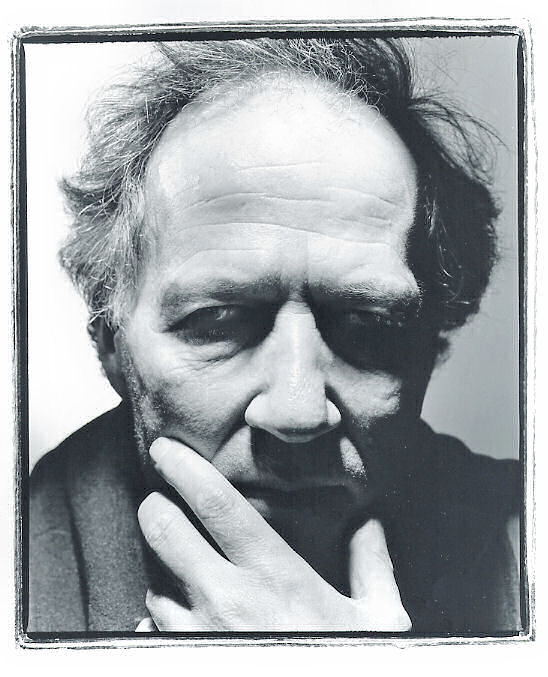
a few thoughts from werner herzog


kester brewin and i were watching werner herzog's film 'the wild blue yonder' in london a few weeks ago and it provoked a conversation about art and meaning. i found myself thinking about this while trying to drift off to sleep in a very warm room last night and the profile of herzog tom bissell wrote last december in harpers magazine came to mind. what herzog says in the following extract is either the transcendent wisdom of an artist, or pretentious nonsense, or both. i like it whatever it is.


'Herzog walked me to the door. I had spent only a few hours with him, but I had spent weeks watching and re-watching his films, and somehow I knew they had changed me. I wanted to tell Herzog this but was not sure how. Instead I asked him if he was ever frustrated that his films were not more widely known. He seemed to get somewhat shy before looking away. “I believe,” he said, “in what I call the secret mainstream. Kafka was there too. Today, yes, we know Kafka was the voice of an overwhelming bureaucracy with a deep evil inside of it. Often we see these figures in the secret mainstream. I am one of them.”

With that, embarrassed, I told Herzog how much I admired him, and how thankful I was that he had agreed to see me. Herzog seemed neither surprised nor pleased by my effulgence. Instead he looked at me for a disarmingly long time—so long, in fact, I began to feel like a character in a Werner Herzog film. Finally, he said: “There is a dormant brother inside of you, and I awaken him, I make him speak, and you are not alone anymore.” We shook hands and he was gone. I walked outside, through a curtain of Los Angeles sunshine, to the street’s edge, where I stood for a long time, ecstatic and not quite alone.'