Friday, March 07, 2008

the return of film talk


all good things to those who wait - after a nearly 9 month long hiatus, enough time for a new human life to be created, jet tloe and i have returned to our podcast, now re-born and re-christened 'the film talk'. find it on i-tunes or at thefilmtalk.com

and let us know what you think.

Saturday, February 16, 2008

the moral pulse of the oscars

The Oscars are a little under two weeks from now - with the threat of the writer's strike leading to an unexpected interruption of one of the most surreal nights of the pop culture year now gone. Rich and famous folk slapping each other on the back, handing out gold statuettes for works of art that many of us haven't seen. It has always surprised me how the winning speeches rarely seem to mention the films that have led to their success – family members, agents, even pets get name-checked – but few awardees talk about the feelings the film may have stirred in the audience. It's as if the heady emotions that are caused at the cinema are too … human … to talk about at something so tawdry as an awards ceremony. Just imagine Jack Nicholson or Nicole Kidman or Will Ferrell discoursing on questions such as the power dynamics in The Godfather, or the sense of loss in American Beauty, or the hope exemplified in Magnolia on the Kodak Theatre stage, and you'll get the picture.

But every now and then, of course, we get the kind of standout moment exemplified by Michael Moore's none-too-subtle attempt at culturally impeaching the president by invoking both the Dixie Chicks and Pope John Paul II at the red-carpetless ceremony that took place just a few days after the war in Iraq began in 2003. In spite of its clunkiness, here at least was a sincere stab at using one of the biggest platforms on earth to make a difference for the common good.

The interesting thing this year is that the films speak for themselves as ethical statements. Each of the five Best Picture nominees represents a high quality attempt at exploring a question of morality, and each takes its purpose seriously enough to propose a response that could stand alongside the kind of ethical positions people who seek to embody progressive spirituality might take.

To continue reading this post on the God's Politics blog, click here.

Monday, February 04, 2008

remembering john o'donohue


The following is taken from a short address I gave as part of the memorial service for John O’Donohue, which was held in Galway on Saturday 2nd February 2008. The photo to the right is of two pilgrims with the beautiful John, in September 2007.

The first time I had a proper conversation with John O'Donohue, it ended with him responding to my invitation for him to participate in a peace-building initiative in Belfast by saying,
‘I think I’m beginning to become involved’. At the time he was referring only to a speaking engagement, but little did I know that he was also going to become involved in my life as a beloved friend, one of the most life-enhancing people I’ve ever known, and a man so in touch with his real self that his goodness was always on the surface, no matter what was going on in his life.

The last time I spent a day alone with him was in July last year, in this very city, beginning only a few hundred yards from where I stand right now. We had arranged to meet on a Sunday evening, but by 9 o’clock that morning I was experiencing an attack of anxiety and depression, no rare thing for a writer, but all I wanted to do was to go home and be alone in my own space.

When I rang John to cancel our evening, he happened to be on the outskirts of the city, and he insisted that we at least meet for 15 minutes. We found ourselves at the McDonalds restaurant car park by the Omniplex cinema – a place which ordinarily I would not consider sacred territory, but now I believe proves John’s assertion that everything can be holy. He bought me both an orange juice and a coffee, invoking his notorious over-reliance on quoting advertisements for L’Oreal haircare products, and telling me he’d get me both ‘because you’re worth it’.

He then said words that I will always hold in my heart; ‘If you need to be in your own space to be depressed, I totally understand, but if all you’re going to do is be depressed, then come and spend the day with me, and we can be depressed together. Because I love you today, and I will love you forever.’

I think you’ll agree that it is a far better deal to be depressed with John O’Donohue than to be depressed on your own. and so, even though his day was busy, we spent the next 24 hours together, as I went with him to the anniversary mass he celebrated for an old friend, and onto his home at Gleann Treasna, where we talked about depression and anxiety, and I felt the healing balm of his friendship over cigars and whiskey by the fire.

I cooked him dinner, and we ate as a spectacular burnt orange sun went down. After dinner, we watched the Coen Brothers’ deliriously funny and smart film version of Homer’s Odyssey ‘O Brother Where Art Thou?’, and laughed the kind of deep laughter that comes only when friends have let their guard down. After the movie, he hugged me goodnight, and I went to sleep on his profoundly uncomfortable sofa. In the morning, he made me porridge and coffee, and then I drove back to Belfast, filled with a sense of well-being, and with insights into my own life that still reverberate in me today, but most of all, with the knowledge of the love of my beloved friend.

********************************

Several years ago, John O’Donohue said to me, ‘I think I’m beginning to become involved’, and it is one of the richest blessings and deepest privileges of my life to acknowledge here today that, for those of us whom he loved, he is still involved.

Thursday, January 31, 2008

Juno


Last night I finally saw Juno, Roger Ebert's favorite film of 2007 and recipient of four Oscar nominations, which has as its center the story of an unplanned pregnancy and the people affected by it. The protagonist, Juno MacGuff, played by Ellen Page in one of those so-good-she's-either-brilliant-or-really-like-that-in-real-life performances, is a misfit attracted to her male mirror image. Wiser beyond her years, slightly jaded by life and negotiating the pitfalls of the high school psychological assault course, she responds to her pregnancy by initially seeking an abortion – and the nonchalance with which she is treated is the only thing sadder than the unthinking speed with which she makes the decision. She is greeted by a lone protestor – the sole representative of institutional Christianity in the movie – as young as her, who, while a welcome change from the angry fundamentalist stereotype, may know as little about adult life as Juno does about the experience of pregnancy she's about to have. But something unsettles Juno, and she is unable to go through with the termination. Instead, she plans to have the child and help a couple seeking to adopt.

And that's it – the rest of the film is a deceptively simple story, taking Juno through the following months, her relationship with family, her best friend, and Paulie Bleeker – the dude she hung out with a little too late one night. There's not much to the tale at first glance, but I found the way in which it is told (by writer Diablo Cody and director Jason Reitman – son of Ivan, who brought us Ghostbusters and the wonderful presidential satire Dave) – so utterly beguiling that by the time the film was over I wanted to go straight back to the start to rediscover these characters all over again.

Click here to continue reading this post on the God's Politics blog.

Thursday, January 17, 2008

Sweeney Todd and the spiral of violence


Tim Burton's striking and gruesome film adaptation of Stephen Sondheim's musical 'Sweeney Todd' made me feel alternately impressed by Johnny Depp's singing talent and wince at the violence. The story of a 19th century barber who avenges the loss of his wife and daughter by providing the closest shave ever to a litany of customers including the judge who caused his pain left me preoccupied by thoughts closer to home.

If the film is trying to make a serious point, it is that Sweeney's spiral of violence never ends. The previous night I had attended a meeting of the Consultative Group on the Past – a body established by the UK Government to examine methods of helping the people of Northern Ireland to address the legacy of our own violent recent history. Two things were clear from the comments made at this meeting by members of the public: first, that the levels of genuine sorrow in this society are unfathomable – families ripped apart, minds taken to the edge of destruction, small communities shattered. This is real, and not interpretation. Second, we often lack the ability to empathise with the pain of the 'other' community. It is all too easy to see 'our' pain as exclusive, and to become blind to the suffering of the community on the other side of a political divide.
Continue reading this post on the God's Politics blog.

i'm not there


there's a degree to which there could be no other title for a bob dylan biopic than 'i'm not there', todd haynes' never less than intriguing take on the life of the man who either represents dedication to hiding greater than any other artist, or reveals all there is to know in his music.

it's a very smart idea to have six actors play characters inspired by the dylan myth; something feels entirely right about having a young black kid, a woman, and richard gere all stand in for different aspects/eras/stories from his life. the film's stunning design - image and sound - conceal a deceptively simple core: nobody knows the real dylan, so maybe there's no real dylan there at all, or, more likely, maybe he is everything we want him to be.

i found myself checking in and out of the movie - i felt it could do with a little tightening, but then again, perhaps its looseness is the point - though it's undeniably thrilling in places. when the 'real' bob shows up in the last moments of the film, in archive footage playing his harmonica, i had the strangest experience: i've never been that interested in bob dylan as a person, though of course some of the music is unrepeatably marvellous. but after a couple of hours of mining the potential pasts of this keystone cultural figure, seeing his 'real' face, hearing his 'real' music was an emotional grace note to compare with the films that make us all cry.

Monday, January 14, 2008

youth without youth


i'm returning to writing about film after j o'd's funeral, partly because there was nothing he and i enjoyed more than a rant about the movies. we would have had a long whiskey-fuelled argument about this one:

francis coppola has thankfully returned to actually directing films rather than simply paying other people to do so; he has finally sorted out his finances with a pretty magnificent vineyard business; and with his american zoetrope magazine gives a heck of a lot back to the kind of people whom i guess remind him of himself when he was younger - people who want to do nothing so much as tell stories in the cinema.

it's over ten years since his last film, and in that time he has tried and failed to mount an enormous film with an enormous name - 'megalopolis' - what would have probably been a sci-fi amazement; but in the past couple of years he turned his attention to the romanian philosopher and cultural theorist mircea eliade, and specifically his novella 'youth without youth', a story of a professor determined to find the original language of the human species, and who is led on a mysterious journey when being struck by lightning leads him to regress into his own youth.

some critics have suggested that this material would have made a great science fiction thriller, but thank god coppola decided to let his inner avant gardist out of the box. for his film of 'youth without youth' is more akin to a david lynch movie than the linear stories beloved by populist directors, and in that respect, has more to say. and while 'youth without youth' is a bit of a mess - it's alternately incredibly boring and capable of stunning beauty - it is also clearly the work of the man who made 'apocalypse now', 'the conversation', and particularly 'the godfather part 2' - its fractured narrative reminds me especially of the latter. of course, its story of a man ageing in the wrong direction, and too fast, also reminds me of 'jack', the nadir of coppola's career; but that's what you get when francis decides to put all his energy into something. you have to take the bloatedness along with the artistic amazements. (oh, and the best tim roth performance since 'planet of the apes'. i mean that as a compliment.)

what would the original human language sound like? what would it mean if we could hear it? is love the only force that transcends everything else? probably. i'm pretty sure francis coppola thinks so, and i'm glad he's back in the game that he plays best. 'youth without youth' is a strange film that manages to be monotonous and thrilling at the same time. it will leave you scratching your head in frustration at some scenes, and desperate to see some other parts of it again. if you care about cinema, you should see it.

Saturday, January 05, 2008

John O'Donohue, 1956-2008, and continuing forever


I'm deeply saddened to report that my friend the Irish priest, poet and philosopher John O’Donohue, died suddenly on Thursday 3rd January 2008, and I'd like to share some thoughts about him.

John O’Donohue was my friend. We had been getting to know each other for almost four years now – a lifetime in our transient world – the very world that John’s words sought to slow down. I felt that we had in some sense adopted each other as compadres on the spiritual journey – a 50-something former priest taking into his life a 30-something former evangelical; both of us bound by our common Irish heritage, love of cinema, and fondness for sipping what he insisted on referring to as ‘firewater’. We spent many hours talking on the phone, eating together, and engaging in two of our favourite pursuits: whiskey and talking about movies.

He had a way with words that made you feel whole again – he created a space with language, both spoken and written, that felt like the home you never knew you were missing, but now never wanted to leave.

His work on retrieving the earthiness of celtic spirituality and helping make sense of it in a postmodern world is so profound that its impact has not yet been fully felt, and it represents something rare in a consumerist, post-Britart culture: a work of art that will outlast its author.

He managed also to write with the utmost seriousness and care for language, making his books the kind that you read slowly, savouring each page; meanwhile, his public talks were characterised by an indelicate Irish charm and the kind of wit that leads to laughter so deep it makes you feel like you belong.

What many may not know is that in addition to his ministry in the Catholic priesthood, and latterly as a writer and speaker, he was a serious environmental activist, helping to spearhead a small group that successfully prevented the despoilment of the Burren, one of Ireland’s most stunning natural landscapes. He put his reputation on the line to save something worth preserving, even being prepared to go to prison to do so.

In his activism, as well as his writing and speaking, and most of all, in his life, he wanted people to have shelter from the storms their lives would bring; when I once told him of my own struggles with serious depression and anxiety he clapped his hands together in a gesture of defiance and almost shouted at me: ‘May those feckin devils stay far from your door and NEVER TOUCH YOU AGAIN. You are worth far more than you think.’ His presence in my life made me believe it.

John knew that we live in the intersection of the sacred and the profane, and he wanted to nudge us in the direction of understanding that holiness has more to do with being aware of the light around us than moral puritanism. In the introduction to his most recent book ‘Benedictus’, published only a couple of months ago, he writes of how in any given day, some of us humans will experience the shock of being told of the sudden death of a friend. John wanted us to be tender to the fact that the faces of strangers we meet every day all hide secrets that are both divine and tragic. We do not always know who among us is suffering some unnameable torment, nor who is rejoicing at the blessing of a lifetime.

Last night, I became one of the people he wrote about – when I received an email (another manifestation of this world’s transience) informing me of his peaceful death, while asleep, on holiday in France. It is bewildering to note that a man who brought so much life around him is dead. But it is also vital to remember that he saw death as a path to freedom. He had spent so much time ministering with the dying – one of the greatest privileges of ministry, as far as he was concerned – that I felt he was, while totally committed to living life to the full, somehow also looking forward to his own death. Not in a morbid sense, but simply because he did believe that our own death is a step forward. He often said ‘when you enter into freedom, possibility comes to meet you’ – I imagine that he is, right now, experiencing a kind of freedom about which he would – at the very least - write some pretty marvellous poetry. It is hard to begrudge him his death when part of him was so ready for it.

I wonder how he’d describe it. For those of us left behind, well, we miss him dearly, and are grateful for the spaces he opened in our lives. I find it almost impossible to believe that he is gone; but if he was right about his own future, we will meet again.


A BLESSING FOR EQUILIBRIUM.
BY JOHN O’DONOHUE, from ‘Benedictus – A Book of Blessings’

Like the joy of the sea coming home to shore,
May the music of laughter break through your soul.

As the wind wants to make everything dance,
May your gravity be lightened by grace.

Like the freedom of the monastery bell,
May clarity of mind make your eyes smile.

As water takes whatever shape it is in,
So free may you be about who you become.

As silence smiles on the other side of what’s said,
May a sense of irony give you perspective.

As time remains free of all that it frames,
May fear or worry never put you in chains.

May your prayer of listening deepen enough
To hear in the distance the laughter of God.

Monday, December 10, 2007

Where does 'The Golden Compass' lead?


Here's the good news: The Golden Compass does not promote atheism. It isn't going to steal your children. It does not signal the end of hope for religion in the West. That's the good news. Here's the bad news: it promotes the same, shallow "don't touch my stuff or I'll kill you" message that appears in so much of popular culture. But more than this, in spite of delightful visual imagery, and a couple of performances in which it's clear the actors are having fun (an icy Nicole Kidman, and the great English theatrical knight Derek Jacobi to name two), it's simply a boring film.

At its centre there is at least an attempt at exploring interesting territory – we are in a parallel universe in which everyone is accompanied by a 'daemon' – an animal representation of their personality, and a comfort in times of trouble. Meanwhile, a shadowy authoritarian body, "the Magisterium", is abducting children and performing daemon amputations. Too much daemon, too much free will, too little for the Magisterium to do.

The religious resonances are obvious, but the film doesn't make any explicit commentary on Christianity. Rather, its enemy is the misuse of power to force people to think or act against the exercise of freedom.

To read the rest of this post on the God's Politics blog, click here.

Thursday, November 29, 2007

No Country for Old Men


When a film ends with the recounting of a dream in which a weather-beaten, life-weary man searches for the fire his father is building to warm them, it's impossible not to think of the love we all yearn for and can hopefully muster. It's also a welcome spiritual respite when that film has seduced its audience on a journey into a hell of the relentless violence that follows a man after he steals drug money in the naïve belief that its owners might ignore him, and the slow-moving chase that ensues when a truly psychopathic person pursues the man and the cash. No Country for Old Men, the new picture from the Coen Brothers, based on Cormac McCarthy's 2005 novel, is probably the most accomplished film released this year.

I'll do my best to avoid spoilers, as it would be unfair to assume that readers have seen it. So I must skirt around the issues that cause me to praise this film so highly. In short, No Country for Old Men is a slow, thoughtful, frightening, and beguiling film about the selfishness of people and the desperate need to restore the virtue of community bonds. Its central character – called Anton Chigurh, and played by Javier Bardem – is one of the most titanic characterizations of evil intent I've ever seen in a film. He simply kills what gets in his way, and even plays sport with some of his potential victims - inviting them to toss a coin to determine their fate. Josh Brolin is the man who finds the money belonging to Chigurh's employers, and Tommy Lee Jones the sheriff baffled by the trail of death that ensues in their wake.

To read the rest of this post on the God's Politics blog, click here.

Monday, November 12, 2007

lions for lambs


In some senses Robert Redford is the father of modern independent filmmaking, not to mention the patron saint of Hollywood liberalism – his Sundance Film Festival has launched a couple of dozen major careers, and his concern for progressive environmental policies is well known. And United Artists used to be known for making the kind of movie that entertained and provoked at the same time – from 'In the Heat of the Night' to 'Being There' to 'Rain Man'.

After a decade or more in the doldrums, the studio has been resurrected by Tom Cruise, and the first film released under this banner is the Redford-helmed 'Lions for Lambs' – a tub-thumping intellectual thriller that pits brains against brawn as a liberal university professor, a neo-conservative senator, and a smart journalist duke it out for the prize of 'who gets to direct the war on terror' - which the film shows still to be fought by the poor.

Such a film could have been a thoughtful exploration of the nature of American liberalism post-9/11, a call to action, or an intelligent treatment of the questions of how to respond to injustice without repeating it (or overcoming evil with good, as the New Testament would have it). Yet sadly it ends up a wasted opportunity - with mostly old arguments being rehearsed once more in a film whose performances are flat and is without visual interest.

There is, however, some merit in 'Lions for Lambs'...Read the rest of this post on the God's Politics blog.

Monday, November 05, 2007

rendition


Some thoughts on the practice of extraordinary rendition - The fact that we know such practices are employed in our name should have been enough of a wake up call – but as yet, the groaning near-silence of free people whose leaders exercise injustice on our behalf continues. Are we prepared to do more than go to meetings, or to pray, or to write blog posts about what is happening in our world? What will a non-violent Reformation require of us? - if you want to read more of my thoughts on this, check out the God's Politics blog...

Thursday, October 25, 2007

surprising wonderful movies of the week number 1 and 2


in advance of leaving new zealand the night before last i watched one more film with mike and rose riddell - 'samsara' is a quite remarkable film about a tibetan buddhist monk journeying between spirit and flesh. we first see him returning to his monastery after spending three years' meditating in a cave; but on his attempt at re-entering community life, he is occupied with sexual fantasy. having never lived a life outside the cloisters, he decides to leave the monastery to pursue the love of a good woman. this, in itself, is an intriguing premise - but the film-makers handle the subject so well that i was utterly beguiled. 'samsara' is a beguiling film, which marries an earthy story with stunning photography, seductive but realistic performances, and music that seems to arise naturally from the images. it's one of those films you feel delighted to have been introduced to.

the same goes for a very different movie that happens to address similar territory: 'it's all gone pete tong' - a glorious dramatic comedy about a mad dj who comes to a crisis point as ibiza's living god of the dancefloor. i missed this on its original release, and assumed from the marketing and the fact that it stars british comedian paul kaye that it would be a zany comedy. couldn't have been more wrong. if i'd seen it in 2005 it would have been one of my favourites of the year; and paul kaye proves that you can teach an old dog new tricks: he's a very fine actor indeed.

both 'samsara' and 'it's all gone pete tong' are films about men who need to grow up. they're also beautiful movies that will make your day.

Sunday, October 21, 2007

la vie en rose


marion cotillard's performance as edith piaf in the biopic 'la vie en rose' is one of the most disturbing and real i've seen. i knew very little about this woman's life before i saw the movie; afterward, if the film is to be believed, i was reminded of the proverbial view of the artist as a person who is aching on the inside, in desperation to produce something that will achieve public recognition. the personal tragedies that seemed to colonise piaf's life, from her beginnings, raised in a brothel, to losing a child, a lover, and her physical well-being, are related in an unconventional and ultimately quite brilliant cinematic style - choppy narrative, alternately sweeping and staccato photography, and of course incomparable music. at the end of the film, cotillard as piaf sings 'je ne regrette rien'. i'll never smile at that song again.

Saturday, October 20, 2007

as it is in heaven


saw a beautiful film a couple of days ago down at mike and rose riddell's house - if there's anyone out there who hasn't read something by mike, i heartily encourage you to do so forthwith. godzone and threshold of the future are great places to start. the film they showed me - mike's second favourite after magnolia, which is high praise indeed - is from sweden and called 'as it is in heaven'. it's about an orchestra conductor who returns to his home village after a heart attack to recuperate, and ends up working with the local church choir. it deals with similar themes to 'babette's feast', 'together', and 'chocolat'. grace, community, forgiveness, domestic violence, the real treasure lying within - all these are here, along with some of the most mystical and ecstatic music i've heard in a film. it's honest about the need to hold people accountable for their mistakes (but gives more hope to 'sinners' than 'chocolat' - which to my mind negated all that was good about its message by making one of the community an outcast; 'as it is in heaven', however, finds a way to both hold accountable, and offer the possibility of change to its most violent character.)

the last scene of this film is one of those perfect cinematic representations of our best hopes for life lived out loud, in the presence of loved ones, with no fear of what others may think. some viewers might find this film a little on the sentimental side, but it made me want to dance like no one's watching.

p.s. kudos to michael nyqvist for one of the most beguiling performances in recent years.

Sunday, September 30, 2007

'A pro-lynching movie even liberals can love'


It's intriguing how many current films address questions of revenge and justice. Like all cinematic epidemics, this is a mixed bag, from Quentin Tarantino's alternately boring and horrifying car-crash fest Death Proof, just released on DVD, to the slasher-style terror of Death Sentence starring Kevin Bacon, to the mature and moving reflection on justice and fatherhood in 3:10 to Yuma, to the ostensibly more thoughtful treatment of vengeance in Jodie Foster's new film The Brave One.

Continue reading this post on the God's Politics blog.

Tuesday, September 25, 2007

good news: we do not live in hell


I've been deeply disturbed for some time now, and particularly over the past week by how the TV/radio/internet news agenda dictates what we prioritise, and how our relationship with the web has colonised so many of our lives. I know this not a new thought, but something about the daily reports of individual and communal suffering of the recent past has reached a tipping point for my threshold of balance.

In the ancient days of dial-up, I checked email twice a day; and always made a point of checking in with a news website. In this way, I of course managed to stay in touch with people, but I also once discovered that an acquaintance of mine had been murdered by seeing the news on a website. Nowadays I can find out that a close friend has broken up with her partner, without ever having to talk to her about it, just by getting a notification from Facebook that her 'profile' has changed. Amazing how we don't have to relate to each other any more in person, isn't it?

More recently, having wi-fi at home led to me checking for natural disaster or violent conflict before I even had a cup of coffee in the morning. Until today. I think I have become infected with an addiction to bad news. I'd like to be able to commit to stop looking at news websites as often as I currently do. I think it might save my sanity, and help me get a better grip on the proportion of good to bad news in the real world. I don't mean, of course, that bad news isn't happening, or that we should ignore it. But I do wonder if the more we think we know about it, the less we are likely to act. And at the same time, I still have a sentimental tendency to believe that it is better to light a candle than to curse (or indulge) the darkness; which is partly why I have put a photograph of my favourite place in northern Ireland at the top of this post (it's the Silent Valley in the Mourne region). I wrote the following thoughts a year or so ago, but I think I only now have begun to believe them...


Wait a few minutes for the headlines in any news broadcast, and, in spite of the nobility and supreme good looks of its presenters, you’re bound to be not too far from the suggestion that all of human life’s going to hell. All news, it seems, is bad news.

The news recently has confronted me with stories of kidnap plots, infant deaths, senior citizen robberies, figures on the religious right suggesting that their God is a petty tyrant, whose only motivation is to punish errant humans by sending them hurricanes or strokes, students running riot in Belfast’s Holy Land, and a 76 year old man who needed two lethal injections to execute him. The world presented in this way is a fearful place, a society gone crazy, a circus with lions but not clowns.

It’s not the kind of world I’d like to live in.

And, of course, it’s not the kind of world that I do live in.

Recent media reports could just as easily have reflected any of these stories, all of which took place yesterday.

A man in India wiped the tears of a grieving woman.

Some people in New York City saw a film that will change their lives forever.

A business executive in London chose not to participate in work that exploits other people.

A family in Derry decided that they would recycle their newspapers from now on, and contribute to ensuring that there may actually be a planet to sustain human life in the future.

A couple in Edinburgh switched off their television, and decided they would never switch it on again if they could spend time eating and drinking with other human beings instead.

Music was composed in Galway that will bring peace to the wounded hearts of people.

Stunning light shone on the shore water of Strangford Lough.

Legal cases were continuing to challenge the use of the death penalty in the United States.

An elderly woman in east Belfast tended to the chrysanthymums in her garden.

Students in Belfast’s Holy Land invited other students to eat pizza, chill out, and form friendships, some of which will last for the rest of their lives.

The legacy of Martin Luther King was marked by a teacher in Berlin who seeks to transmit his profound non-violence to a new generation.

People all over the world fell in love and provided the ground from which new human life would be created.

A few people in an undisclosed location learned to live without fear.

There was a rhythm to life that made us sane, and some of us decided to stop allowing the agenda of bad news to dictate the pace of our lives. Instead, we acknowledged to ourselves that God is present in the world, in every smile, in every wound, in every house, in every street, in every atom. Look out your window. There is no monster on the corner. The creation is good, the world is beautiful, and so are you.

Saturday, September 22, 2007

Jesus loves Kathy Griffin anyway


After a year of scandals in which celebrities such as Mel Gibson, Don Imus, and Isaiah Washington have reminded us that fame does not cancel out bigotry, Kathy Griffin last week became the latest public figure to make such headlines with her Creative Arts Emmy acceptance speech. Referring to the tendency of some of her colleagues to invoke divine sanction for their success, she said, among other things, that "no one had less to do with this award than Jesus." Her remarks were censored on the telecast, and at least one Christian public figure has since implied on CNN that her words were more offensive than Imus' racist comments about the Rutgers basketball players, or Washington’s homophobic remarks about Grey’s Anatomy co-star T.R. Knight. The questionable logic that led to this assertion is that "85% of Americans believe in Jesus," while only a minority are black, and a much smaller number are gay. First of all, the suggestion that only the groups who are targeted in dehumanising rhetoric should be offended by them is absurd -- of course you don't have to be the victim of prejudice to be offended by it. It's understandable that people get offended when the names of religious figures are used in a derogatory fashion. It is also true to say that today it is more publicly acceptable to criticize Christianity than most other faiths. And sometimes it may be appropriate to protest this.

Continue reading this post on the Gods Politics blog

Thursday, August 30, 2007

'Bourne' Again?

I wrote here a few weeks ago about the new Die Hard film, and especially how I felt it represented a disturbing advance in the portrayal of heroes as violent men whose main purpose is to uphold materialism. Among other things, Bruce Willis' character, John McClane, kicks a woman half to death, then drops an SUV on her head for good measure, and we're supposed to applaud. Surprisingly enough, the comments on this blog were mostly critical of what I said – which is of course perfectly fine, given the freedom of discourse that exists on this site. But it was ironic to find that the very point I was making – that we have become inured to violence in the real world by its portrayal on screen – appeared to be borne out by many of the comments.

Continue reading this post on the God's Politics blog by clicking here.

Tuesday, August 14, 2007

greenbelt films of the year: the final list


With just over a week to go, here's the final list of what I consider to be the best films of the past twelve months, and some worthy of discussion that may or may not be good films, to be discussed at my 'films of the year' seminar at Greenbelt - I know this will be a controversial list, so do please comment on these in advance and I'll try to respond to some of the comments at the seminar. It's on the Monday afternoon, so I hope you'll join us for some serious film discussion and at least one major surprise.

THE BEST FILMS OF THE YEAR (released between end August 2006 - end August 2007)

16: The Queen - fascinating experience of seeing someone we had previously only seen in parody – what does it mean for what Britain is as a nation?

15: An Inconvenient Truth – truly campaigning film – changed the direction of the wind

14: Dreamgirls - for pure entertainment value, the most exciting film of the year

13: Little Children – when will we all grow up?

12: Flags of our Fathers/Letters from Iwo Jima - Clint Eastwood, a former Republican city mayor produces two of the most profound anti-war statements ever committed to film

11: Jindabyne - a Raymond Carver short story transplanted from the US to Australia, which manages to squeeze in reflections on men and women's relationships, aboriginal rights, ancient religious culture, guilt and shame, self-identity and the fear of what lurks under the bed

10: Into Great Silence - a film that makes you feel like you're living in a monastery

9: The Departed – violence as a way of life; what should policing be about?

8: Stranger than Fiction - what would you do if you really believed you could write your own life?

7: The Lives of Others - a film that makes you feel you might be living in a prison, but that your perceived enemy may well be your best friend

6: Zodiac - an American thriller that takes murder seriously

5: Little Miss Sunshine – let families be real by reducing your expectations

4: Ten Canoes – storytelling and how we muddy the waters

3: Children of Men – one of the finest films of the year – a fearful nightmare of what might be happening to us; but the lengths to which people will go to preserve human life out-reach the killing: love is stronger than death

2: Once - a beguiling love story that takes the underclass seriously

1: The Fountain - a film that actually succeeds in conveying what it feels like to be in love


WORTHY OF CONVERSATION

Bobby/Tell No One/Babel/Borat/Casino Royale/Pan’s Labyrinth/Shortbus/Sicko/Perfume/Apocalypto/A Prairie Home Companion/Crank/This Film is Not Yet Rated/Rocky Balboa/Old Joy/Notes on a Scandal/Transformers/Knocked Up/Half Nelson/Inland Empire/Idiocracy/Hot Fuzz/This is England/Beyond Hatred/300/Amazing Grace/Shooter/Alpha Dog/Black Gold/Die Hard 4.0/The Bourne Ultimatum

Friday, August 10, 2007

Antonioni and Bergman and Spiritual Activism


Film buffs began last week greeting the news that two of our greatest artists had died. Ingmar Bergman and Michelangelo Antonioni lived to be 89 and 94, respectively, and were still making films until a couple of years ago. Their work had exerted such an influence over world cinema for over half a century that it is impossible to imagine film culture without them. Antonioni and Bergman made films about the human interior journey – the travels and travails of the soul. They were sometimes preoccupied with the fear that life had no meaning, and at times seemed desperate to produce cinema because the making of the films themselves were part of their own struggle for enlightenment.

Continue reading this post on the God's Politics blog.

Tuesday, August 07, 2007

once in a while


once in a while, a film comes along that makes you believe the hype about small being beautiful, non-professional actors being more 'authentic', and digital video being the way forward. it gives credibility to the festival that awarded it prizes, it is worthy of the ecstatic reviews you've seen in the press, and it manages to hit high notes that are so personally resonant to the viewer you can't help imagining they made it for you.

'once' did this for me yesterday. it's an irish film written and directed by john carney, about two musicians, played by the frames' glen hansard, and marketa irglova, meeting and making music together in dublin. the music arises naturally out of the story - he's busking, or they're recording together, or singing at a party. the story arc is pretty conventional - boy meets girl, girl gives boy 10 cent as a busking contribution, boy fixes girl's vacuum cleaner, and the rest ensues in patterns that we've seen before, but the way 'once' does it is so beguiling that you easily forget you're watching a fantasy. this film feels like real life. paralleling the love story is a subtle commentary on the dublin underclass - both the sector of the indigenous poor that is fatally addicted to heroin, and the 'new irish', immigrants living a dozen to a house, sharing space so cramped that their landlords should be ashamed. or at the very least, those of us who live in ireland and know landlords should be shaming them into behaving ethically.

but what lingers most in the mind about 'once' is the story of two lonely people interacting with each other's souls. i love the rough edges of this film - some of the lighting isn't great, it's obvious at times that we're watching inexperienced actors - because this is what makes it feel like it's really happening. i also like the fact that it portrays the guy as the romantic, while the girl is the practical one who thinks clearly. a subversion of love story cliches, to be sure; but i think it also tells a certain kind of truth that is usually underplayed in the kind of movies that disempower women by portraying them as only waiting for their prince charming to ride in and sweep them off their feet. 'once', however, is a film that manages to entertain, move, educate, challenge, and provide realistic hope in the midst of an often despairing urban environment. 'once' is my favourite film of the year so far.

Friday, August 03, 2007

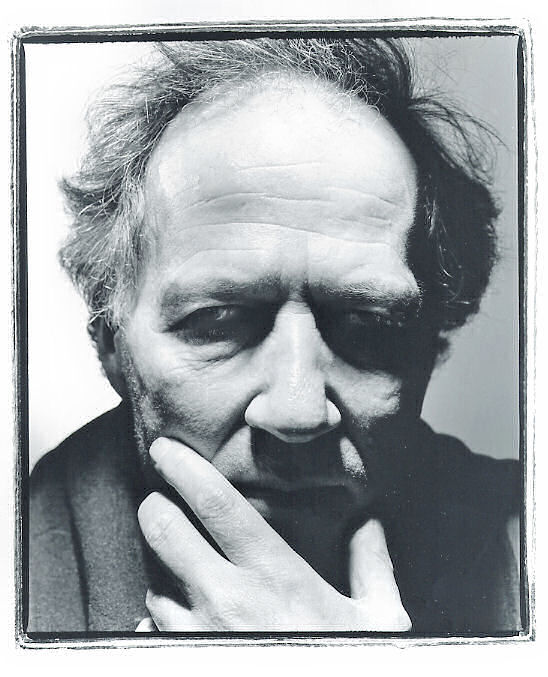
a few thoughts from werner herzog


kester brewin and i were watching werner herzog's film 'the wild blue yonder' in london a few weeks ago and it provoked a conversation about art and meaning. i found myself thinking about this while trying to drift off to sleep in a very warm room last night and the profile of herzog tom bissell wrote last december in harpers magazine came to mind. what herzog says in the following extract is either the transcendent wisdom of an artist, or pretentious nonsense, or both. i like it whatever it is.


'Herzog walked me to the door. I had spent only a few hours with him, but I had spent weeks watching and re-watching his films, and somehow I knew they had changed me. I wanted to tell Herzog this but was not sure how. Instead I asked him if he was ever frustrated that his films were not more widely known. He seemed to get somewhat shy before looking away. “I believe,” he said, “in what I call the secret mainstream. Kafka was there too. Today, yes, we know Kafka was the voice of an overwhelming bureaucracy with a deep evil inside of it. Often we see these figures in the secret mainstream. I am one of them.”

With that, embarrassed, I told Herzog how much I admired him, and how thankful I was that he had agreed to see me. Herzog seemed neither surprised nor pleased by my effulgence. Instead he looked at me for a disarmingly long time—so long, in fact, I began to feel like a character in a Werner Herzog film. Finally, he said: “There is a dormant brother inside of you, and I awaken him, I make him speak, and you are not alone anymore.” We shook hands and he was gone. I walked outside, through a curtain of Los Angeles sunshine, to the street’s edge, where I stood for a long time, ecstatic and not quite alone.'

greenbelt films of the year seminar


it's that time of year again - just a couple of weeks to go and greenbelt will be upon us. i'll be doing my now-traditional films of the year seminar, and as with last year, i'm providing a sneak preview here of the films i'll be discussing - but this time round, i'd like to hear your views, both of films on this list, and any that are omitted that you think i should be talking about. the only rule is that the film needs to have been released in the UK since the end of August last year - check www.imdb.com if you're not sure of release dates. also, it should be noted that not all the films on this list are necessarily 'good' - but they're here because i think they have some cultural significance.

here goes with the list:

Crank – watch a man die as quick as he can

This Film is Not Yet Rated – asks silly questions about sex in the movies; but acknowledges that sex and violence are treated differently by the UK and US authorities

The Wicker Man remake – a ridiculous film about the 'dangers' of women which destroys the religious thoughtfulness of the original

Little Miss Sunshine – let families be real by reducing your expectations

The Black Dahlia – money after old rope

The Queen - fascinating experience of seeing someone we had previously only seen in parody – what does it mean for what Britain is as a nation?

An Inconvenient Truth – truly campaigning film – changed the direction of the wind

Talladega Nights – not as funny as it thinks it is

Children of Men – one of the finest films of the year – a fearful nightmare of what might be happening to us; but the lengths to which people will go to preserve human life out-reach the killing: love is stronger than death

World Trade Center – a film about honouring the courage of those who died – and the horror of what happened in there – people of the left need to face this; we need to express at least as much anger about what happened on 9/11 as we do toward George W Bush's response

The Departed – violence as a way of life; what should policing be about?

Slavoj Zizek's Pervert’s Guide to Cinema – movies as the projection of our own desires

Last king of Scotland – great central performance, but I wish it had done more to explore where Amin's motivation came from

Marie Antoinette – same with her as with Amin

Little Children – when will we all grow up?

Bobby – not a great film, but inspirational message; the non-violence speech at the end is great

The Prestige – the power of ambition

Ten Canoes – storytelling and how we muddy the waters

Tell No One - great barnstorming thriller with the power of love at its centre

Babel – life is a coincidence – four short films, the Japanese one has the most empathy; I could have done without the others

Borat - not quite sure what to make of it yet

Into Great Silence

Casino Royale

Pan’s Labyrinth

Shortbus

Stranger than Fiction

Sicko

Flags of our Fathers

Letters from Iwo Jima

Night at the Museum

Perfume

Apocalypto

A Prairie Home Companion

Rocky Balboa

The Fountain

Old Joy

Dreamgirls

Notes on a Scandal

Lives of Others

Half Nelson

Good Shepherd

Good German

Inland Empire

Idiocracy

Beyond Hatred

300

Amazing Grace

Catch a Fire

Why we Fight

Sunshine

Shooter

Alpha Dog

Spiderman 3

Night of the Sunflowers

Jindabyne

Zodiac

Black Gold

Die Hard 4.0

Simpsons Movie

Transformers

Nomadak TX

Monday, July 30, 2007

(slightly) disappointing simpsons movie


it made me laugh, but not as much as some of the episodes. quite surprised to find that they didn't seem to invest the time and thought necessary for a truly great script. not enough mr burns. good tom hanks cameo. nice to see the scope of springfield on a big screen. homer eats electrofied fish and nearly kisses a pig. funnier than it sounds. and everyone gets forgiven and goes home.

Saturday, July 28, 2007

ray lamontagne, irish car bombs, and business travellers


Ray LaMontagne’s recent album "Till the Sun Turns Black" ends with one of the most beautiful songs about peacemaking I’ve ever heard—in which he simply repeats the refrain "War is not the answer, the answer is within you" over the most delicately lilting instrumentation. It’s the kind of sentiment that could be accused of being too vague to have any practical meaning, but warm and positive enough to be popular. But there’s something about it that feels deeper than that.

It comes to mind as I sit in a cramped and crowded airport in Missouri, between cities on a trip that will take me from the Deep South to the Pacific Northwest, meeting and talking with people seeking to explore faith at the margins of institutional Christianity. I’ll be part of a conference the week after next on the topic "Dangerous Living"(www.solitonnetwork.org)—a title ambiguous enough to invite further interrogation. The organizers aim to build a temporary community of fellow travelers asking questions and sharing experiences of what it means to follow the radical Jesus in a culture that often seems to privilege consumerism above all else and seeks to avoid anything resembling physical work at all costs. We’ll talk about faith and social justice—just what does it mean in our day to hear Jesus tell the rich young ruler how hard it is to get into the kingdom of heaven? We’ll investigate faith and authority: What kind of leadership is required when so many of our public role models leave so much to be desired? We’ll immerse ourselves in faith and creativity, hoping to become more attentive to the voice of God in art, film, music, and nature. Most of all, we will wonder together what it means to be stewards of the Christian tradition that we inherit without falling into the trap of religious imperialism. In other words, how can we take responsibility for sharing our faith without imposing it on others in a way that prevents anyone taking us seriously?

These questions were not far from my thoughts this afternoon, as we sat down for a meal at one of the in-house airport restaurants. Just after my Diet Coke arrived, the gentleman next to our table took a phone call, the first few lines of which went as follows:

‘Hi there—didn’t realize you were on that side of the pond. You looking for more bombers, or just drinking Irish car bombs?’


To continue reading this post on the God's Politics blog, click here

Sunday, July 22, 2007

fame is a mask that eats the face

Posh Spice might hope to feel at home in her new life in Los Angeles, but hubris is winding its way into her week as the ratings of her "Welcome to America" pseudo-documentary come in. In the U.K., where I live, this program was billed as a light-hearted, even "spoof" piece about her reputation for excess. But it seems the U.S. audience, or at least its television critics, weren’t quite ready for this. At any rate, whether or not she was joking, Victoria Beckham and her husband have become today’s totems of consumerist overdrive.

At the same time, according to media reports, the well-known environmentalist and anti-war activist, Barbra Streisand, has apparently issued the staff of a London hotel with demands about how they are to treat her while she stays there—including instructing them not to look her in the eye. You have to wonder just why someone who is about to sing to 15,000 people who are paying up to a thousand dollars each might be scared of a little personal interaction with just one of them, but I guess Barbra feels she’s earned the right.

Continue reading this post on the God's Politics blog

Wednesday, July 18, 2007

soliton ventura - the year's best gathering


soliton network's annual ventura, california gathering takes place in just three weeks' time. this has become a regular fixture for many of those who attend to explore life and spirituality, to eat together, make fantastic friends, and feel just a little more alive than usual. i'll be there to help facilitate some discussion, along with pete rollins, kester brewin, barry taylor, and others, especially maestro greg russinger who puts the whole thing together with the folk formerly of the bridge.

in the midst of many competing opportunities for creative people to explore theology together, i have genuinely found soliton to be the most stimulating, enjoyable, and nurturing to my own soul over the past few years. hospitality is a hallmark of what these guys do, and so if you've never been before, and you can be in the area, then i'd encourage you with no hesitation to register - you'd be made more welcome than you could imagine.

all the details are here.

Monday, July 16, 2007

‘IF GOD WERE HERE, HE, SHE OR IT WOULD BE SUING A LOT OF PEOPLE FOR LIBEL’ – SINEAD O’CONNOR’S ‘THEOLOGY’


Sinead O’Connor’s not angry anymore; or at least not angry in the same way. Her tearing up of a photo of Pope John Paul II on Saturday Night Live 15 years ago has combined with what we think we know about her ordination into an unofficial offshoot of the Catholic church to give a convenient excuse for people to ignore her. This is a pity, because it makes us forget that she produced one of the only memorably and honest songs about love in the 1990s with her cover version of Prince’s ‘Nothing Compares 2 U’; and one of the most beautiful hymns of spiritual comfort in 1997’s ‘This is to Mother You’ on her ‘Gospel Oak’ EP.

She has made her spirituality more explicit than ever on ‘Theology’ a new double album; and the anger of early Sinead has given way to songs of hope, confidence, and worship. In 23 tracks she sings of God being present in the earthiness of a life lived between the search for truth and the struggle to get by – when she relates how God met ‘my need on a chronic Christmas Eve’ it is easy to imagine the pain that many people feel at the times when the culture is forcing them to pretend to be happy.

To continue reading this post on the 'God's Politics' blog, click here.

Wednesday, July 11, 2007

live free, or watch die hard


Great helicopters and explosions abound, the witticisms are barbed, and the cinematography is silver-grey in Die Hard 4.0 (or Live Free or Die Hard, depending on which empire you see it in). I was tired to start with, but the film couldn't wake me up. I vacillated between being bored and horrified, as Bruce Willis yet again stands in for the lone American male whose first resort is always violence (in the first film he was the archetype of a Vietnam War vet, assailed by terrorists on the one hand, and a frustrating civil service bureaucracy on the other; this time he clearly represents the guy who'd go to Iraq just because it's the right thing to do, even though he knows the government sending him is corrupt)...

To continue reading the rest of this post on the God's Politics blog, click here

Tuesday, July 10, 2007

apocalypto and mel's mother-figures


i finally got around to seeing 'apocalypto' last night - it's a mixed bag - an undeniably exhilirating film, but extremely violent; and either a tragic reflection on how those who live by the sword die by it, or a 16th century lethal weapon, or both. the controversy that surrounded its director mel gibson just before it was released clouded serious discussion about what this film means, so let me just add one thought.

in each of the epic -canvas films that gibson has directed - 'braveheart', 'the passion of the christ', and 'apocalypto' - there is a scene where the central male character undergoes some kind of torment while a strong female character in his life looks on from a crowd. in 'braveheart', william wallace sees the ghost of his wife while he is being tortured to death; in 'the passion', mary gazes helplessly at jesus carrying the cross, and even sees him transformed in her mind's eye into a the little boy she raised; now, in 'apocalypto', jaguar paw, being led to the top of a pyramid to be sacrificed to the sun god, has a moment of almost unbearable tenderness with his mother in law.

whatever else may be said about mel gibson's ideological beliefs (which are difficult, at best, to determine; given the circumstances under which he has expressed them), ability as a director, or personal problems, it's pretty clear to me that one aspect of his career that has been undervalued is something other than the misogyny that action stars are often accused of. is it just possible that mel gibson loves women? that he loves mothers? that he wants to give them the respect they deserve?

Thursday, July 05, 2007

gordon brown's challenges


They say a week is a long time in politics – given what has happened in the UK in the past seven days, that statement proves that some clichés can indeed be true. A week ago, Tony Blair left office and power was seamlessly transferred to his rival Gordon Brown. Brown immediately set to work, replacing all but three members of his Cabinet and launching a major public debate on the British constitution. The man with the reputation of being a ‘dour Scot’ showed himself unable to fulfil one of the modern politicians’ job requirements by struggling to wave (and look like he was enjoying it) while standing outside Number 10, Downing Street. No matter, for by the time he had gone through the door of the house where British Prime Ministers live, he was in charge of the country – he even got a Jim Wallis blog post to welcome him to office!

Jim’s words were an encouragement to see him as a politician with a conscience – a man genuinely committed to addressing questions of injustice. I hope that Brown is able to follow through, but there are a few challenges...


the god's politics blog posted the rest of this article from me during the week...

Thursday, June 21, 2007

urgent - please help our friends at the simple way

hi everyone - urgent news:

our friends at the simple way including dear shane claiborne woke up yesterday to find their house and community center being destroyed by fire yesterday - thankfully no one seems to have been injured - but there's more info on http://www.thesimpleway.org/

apologies if you know this already but we're trying to get the word out so people can help.

there is a link on the simple way's site that you can use to donate if you are able to support.

thank you.

Wednesday, June 13, 2007

another movie haiku


Apes squealing loudly
Monolith appears in space
Evolution Now!

Monday, June 11, 2007

this week's movie haiku


george clooney brad pitt.

stylish casino thieving.

smug like the first two.

Friday, May 25, 2007

the best film i've seen this year


sorry i've been away for a while - much has been going on.


i saw zodiac - a bleak and uncompromising mammoth film about murder and its investigation. david fincher almost seems to be making the anti-Se7en, a fine film which probably spent too much time exploring the seedy underbelly of gruesome violence. zodiac, on the other hand faces up to what murder really is - wiping the slate clean of another human being's personhood, and then breaking the slate. the fact that the film recreates the mood of the 70s in meticulous detail while paying gentle homage to 'all the president's men' and 'the conversation' makes it both a deeply pleasurable for cinephiles as well as a disturbing but profoundly moral film.

Monday, April 23, 2007

religious films

the church times has just published a list of what it calls the top fifty religious films. i was on the panel that decided the films - it takes a fairly narrow definition of what constitutes a 'religious' film - the paper wanted to include only films which make their mysticism explicit (perhaps a contradiction in terms).

it was, however, a fun exercise, and while i didn't endorse the inclusion of each film on the list, and would have added one or two more, i think it's a pretty interesting selection. check it out here and feel free to comment below about what you think should and should not be there.

Monday, April 16, 2007

lives of others and war on terror


saw 'the lives of others' the other night - new german film about the oppressive state regime and the actions of the state security apparatus - the stasi - in east germany before the wall was pulled down in 1989. a man listens to another man talking about his opinions. fairly innocuous, of course; until you realise that the man doing the listening is sitting a few floors above the other man's apartment, and that the sound of his subject's voice is carried through wires hidden behind light switches. and the man who is doing the talking is only being listened to because he has failed to do anything that might actually arouse suspicion in the first place. that, perversely, is what makes the stasi pay attention.

'the lives of others' is a tremendous drama about two human beings and their competing interpretations of what it means to be free. for one, the apparatus of state control is what liberates - if you don't have to think about your life, if you don't have to actually make any decisions, then, the argument goes, the potential exists for some kind of secular nirvana, where all desire is absent. for the other, the existence of 'me' is crushed by such authoritarianism and must eventually be resisted, even if it means the death of reputation, career, or even body.

this film ends with the line 'it's for me', and that statement, of course, can only actually be made by a free person, in a free society.

if the film exists in a clear space and time (and in spite of its over-statement of the very possibility of a stasi operative subverting his masters - on which see anna funder's article in the may issue of 'sight and sound'), it does make subtle comment on the world in which we now live. it is impossible to see surveillance of private lives, and the suggestion that patriotism depends on not criticising any particular government, without thinking (with a good deal of morose regret) of the utter lack of moral imagination applied by the authoritative bodies in the post-9/11 era.

another character makes the link clear, after the momentous events of 1989, for he now has the courage to confront one of his previous political masters with the words 'i can't believe people like you once ruled a country'.

p.s.: 'the lives of others' is a film for our times, and let's hope that hillary benn sees it before he gives his speech challenging 'war on terror' language later today.

Wednesday, April 11, 2007

the end of the beginning

it's now over two weeks since the press conference in which ian paisley and gerry adams announced their intentions to share power in northern ireland from the 8th may. i haven't written about it here until now for a number of reasons, chief among which was that the front page news crowded out space for substantial reflection. i wanted to wait a while before reacting.

so, for what it's worth, here are my thoughts.

there is no doubt that this is a political miracle and it has the potential to truly end the violent conflict in and about northern ireland.

it was a very long time coming, but it's a remarkable achievement.

at the same time, and at the risk of falling into the cycle of rhetorical negativity that too often characterises conversation about northern ireland, there's something i'd like to say. the people who are now taking credit for 'peace in our time' do not deserve it anywhere near as much as those both behind and in front of the scenes who either always spoke non-violently against injustice, or came round to the idea of power-sharing almost ten years ago when the good friday agreement was signed. neither the irish republican movement nor conservative loyalists can claim to have been purely benign or to have acted always in good faith over the past four decades.

on the one hand, for instance, the ira would have us believe that its struggle was so noble that, among other things, it never intended to target 'non-combatants' in spite of the fact that it regularly planted bombs in urban centres where members of the public were bound to be killed.

on the other, ian paisley appears not to have thought that he had a responsibility to de-escalate the conflict in his public rhetoric until after the agreement to share power had been done behind the scenes.

i am glad that no substantive body of opinion in northern ireland now supports the use of force to continue the centuries-old conflict over a tiny piece of land. but this has been in spite of contrary actions by the movements now taking the spoils of war over most of the period they have been in existence. those who are about to take high office (and with it, responsibility for this society) owe at least some gratitude, if not an apology, to those who have struggled for many years for peace and reconciliation.

at the same time, i thank god that one of the world's longest-running ethnic conflicts has become an object lesson in the value of political dialogue (and a little bit of commerce).

there is a lot more to say about this; including of course an acknowledgement that the pain of this conflict left no community untouched, including those represented by the political movements i'm criticising in this post. i trust however that soon we will see honour being accorded to the long-term peacemakers, and more respect to those who died and suffered than has been evident in the past fortnight.

Monday, April 02, 2007

let the sunshine in


saw 'sunshine' tonight - danny boyle/alex garland's new film that manages to be both a sci-fi adventure and a mystical piece about the search for god. it's a companion piece to 'the fountain', (which given the benefit of a few months' distance is certainly my favourite film of the past year), - visually it's a thing of beauty, and
there's much more to this story about the human race to re-activate the dying sun than the bits that sound like 'armageddon' or 'deep impact'. it's pretty clear that the sun in this film is more than just a great ball of fire.

would god abandon us? as we approach easter it's appropriate to remember that at least one Person thought so. or at least he felt that god had abandoned him.

but that story wasn't finished yet.

it still isn't.

Saturday, March 24, 2007

belfast film festival: the kick off


two days into the fest - and the qft bar was filled to the rafters after the screening of 'night of the sunflowers' - a quite special, very stylish, bleak thriller set in the spanish countryside and so evocatively filmed that you almost feel like you're getting a tan.

highlights today of this lovely festival that fills our city with good cinema for 11 days:

railroad all-stars

ten canoes
john malkovich as klimt
and
ghosts of cite soleil

Saturday, March 17, 2007

healing through remembering


i'll be in london on monday and tuesday speaking with others at three events on behalf of healing through remembering - a very thoughtful initiative that is seeking to propose ways to address the past regarding the conflict in and about northern ireland. if you're interested in thinking about these questions, which have a much more universal application than just in my home community, consider yourself invited to any of the events. the events are details here.

Tuesday, March 13, 2007

climate change and journalistic ethics


martin durkin's 'the great global warming swindle' made waves when screened last week. a feature length film presenting scientists who dispute the received wisdom about climate change, 'swindle' is a technically brilliant piece of dramatic documentary, made by someone who also has the courage to stand in the face of mainstream opinion. (whatever it else it is, courage is definitely part of it.)

and yet.

and yet, the response to the film has raised uncomfortable questions about journalistic ethics - the director has been previously found to have misled interviewees, and distorted or ignored facts. at least one of the contributors to 'swindle' has already stated that he feels let down by the programme-makers.

what is saddest about this is that the question of the potential validity of any of the arguments made by the contributors is likely to be subsumed under media sniping about the possibility that we have been misled about some of them. i'm left not sure what to do about this - who do i believe? can anyone help me?

am i left with only the option of splitting the difference between watching 'swindle' followed by 'an inconvenient truth' and a visit to george monbiot's blog?

Saturday, March 10, 2007

old joy


it's been a fortnight of meditative cinema - the monks of 'into great silence', jack nicholson's ambivalent journalist at the heart of 'the passenger', and now the unexpected glories of 'old joy' - a film apparently based on a book of still photographs. two guys who used to be roommates go on a short road trip, lie down in a hot spring, talk a little, feel regret, and go home.

the sense of a once-meaningful friendship disappearing into the past is palpably evoked by the pitch-perfect central performances by daniel london and will oldham, the gentle photography that really takes its time, and the fact that pretty much all of us will be able to identify with the story from the inside.

it's also one of the most subtly devastating critiques of the bush administration, and, more importantly, the lack of a substantive alternative offered from the left (and my generation specifically).

perhaps the only criticism i would make is that there is not enough of this film, but that, i guess is another way of saying that what is there is really rather wonderful.

Monday, March 05, 2007

the passenger


watching michelangelo antonioni's 'the passenger' is a stilling experience, not least of all because jack nicholson's laconic way is better suited to this film than pretty much any other i've seen. the story of a man who disappears into the life of another for reasons best known to himself doesn't rely on movie style or tricks, but conveys something of the inner life of a certain kind of person - he or she who does things for an inexplicable purpose. 'i used to be somebody else but i traded him in' says jack's character, travelling from north africa to london to munich and barcelona by way of the map of the human soul. a character tells another that the questions we ask reveal more about us than the answers given. nothing much happens in this picture, except the transfixed gaze of the audience. and it made me feel like i was alive.

p.s. watch it with jack's commentary on the dvd for a treasurable couple of hours in the presence of one of pop culture's true originals.

Friday, March 02, 2007

if it's not one thing, it's another

spare a thought for this guy, kevin mcconnell, 19-time oscar loser, whose experience last sunday night didn't exactly match that of helen mirren, martin scorsese, or forest whitaker. as the imdb tells us today:

Oscar Loser Lost Mother After the Awards
Oscar's biggest loser Kevin O'Connell had a double reason to feel low the day of the Academy Awards - he was nursing his dying mother, who passed away just after the telecast. Apocalypto sound mixer O'Connell found out he'd missed out on an Oscar for the 19th time on Sunday night, but he had more pressing personal matters on his mind. The multi-nominee attended the Oscar ceremony, but left right after his category was announced and raced to the hospital to check on his ailing mother. In a statement released to website GoldDerby.com, O'Connell says, "My mother Skippy passed away on Sunday night right after the Oscars. I was holding her in my arms when she died."

Wednesday, February 28, 2007

belfast film festival


went to the launch of this year's programme for the belfast film festival yesterday; and, as always it was a pleasant mix of high and low brow conversation about film, splendid people, and excellent - if unhealthy - food to nibble on. i particularly like the potato tortilla, and the opportunity to see what looks like a hundred films in just over a week. check it out.

Monday, February 19, 2007

into great silence


found myself beginning lent a couple of days early last night at belfast's www.queensfilmtheatre.com being drawn 'into great silence' - a near-three hour documentary about life in a carthusian monastery.

it is slow and quiet, and makes the radical gesture of not offering commentary on the lives of those it portrays.

the notion of spending a life in near-silence is threatening to me, perhaps to most of us; but by the end of the film i was almost ready to commit. the film-maker, philip groening, flicks up biblical quotations from time to time, returning to jesus' words about giving up everything to be his disciple. the repetition of this phrase has a hypnotic effect, and as the film builds and builds to a climax in which a blind monk discusses his faith, intercut with scenes of the most extraordinary physical beauty, groening manages to convince that the richness of these mens' lives is an astonishing reward for choosing not to live like the rest of us.

Tuesday, February 06, 2007

celtic soliton sessions: the review

celtic soliton sessions - a long weekend of conversation, worship, reflection, friendship, guinness, music, prayer, freezing beach walks, chocolate, laughter, justice, pain, honesty, exploration, and an encounter with the divine that none of us will easily forget. the continuing friendship between u.s. and irish/british soliton people is a source of wonder to many of us, and the idea of continuing the relationships through the symbol society network is one of the most exciting notions to emerge. this past weekend we talked about contemplation, working with children, subverting unjust authority structures, sexuality and theology, art and spirituality, the inevitable blogging, and many other things under the sun too numerous to mention. the beauty of the north coast of ireland was the perfect setting, and i'm energised for another few months in the landscape of my everyday life. thanks to everyone who was there, keep in touch.

Monday, January 29, 2007

celtic soliton sessions

CELTIC SOLITON SESSIONS

The Soliton Network is an invitation to the rhythms of hospitality and generosity as well as to share resources, laughter, dreams and friendships. Soliton events are informal opportunities for people to reflect on the edges of Christian spirituality and practice - all are welcome, and many have been surprised by how rich the experience is. Speakers/facilitators at previous Soliton events have included Brian McLaren, Erwin McManus, Greg Russinger, Christine Sine, Doug Pagitt, Si Johnston, Jo Coles, Gareth Higgins, and many more.

This year our theme is ‘dangerous living’.

Our traditions are stories of dangerous lives: prophets critiqued dangerously, apostles spoke dangerously, and the early church fathers lived dangerously. Jesus inspired life practices that launched a new society both critical of and dangerous to the present order. 2007's Soliton Sessions are an invitation to rediscover this alternative society. Facilitators already confirmed include Jonny Baker, Kester Brewin, Pete Rollins, Si Johnston, Gareth Higgins, Laura Bagley, Erin Parish and Andrew Jones. As a special event, the wonderful Juliet Turner will also play a gig for Soliton during the weekend.

February 1-4, 2007

Thursday 1st Feb in Belfast

The Belfast event will take place from 10am-4pm at East Belfast Mission on the Lower Newtownards Road (please note change of venue); with an evening gathering for conversation and food from 7.30pm

Friday – Sunday 2nd-4th Feb = Residential in Portrush

Participants are welcome to attend either or both the Belfast and Portrush sessions.

Our facilitators will include Pete Rollins, Jonny Baker, Erin Parish, Andrew Jones, Gareth Higgins, Trevor Debenning and others, and topics in both Belfast and Portrush will include:

• Translating the message of Martin Luther King for today
• Finding spiritual fingerprints in culturally significant films
• Telling the difference between healthy fear and phobias
• Spirituality in contemporary northern Ireland: challenges and opportunities
• How (not) to speak of God

And whatever else you'd like to talk about!

We’d love as many people as possible to benefit from the conversation, provocation and friendship provided through Soliton – so please do sign up if you’d like to attend. More information at www.solitonnetwork.org; or email gareth_higgins@ntlworld.com if you have any questions.

Tuesday, January 09, 2007

the meaning of rest in peace


those of you who follow northern ireland politics will know that david ervine died yesterday after falling suddenly ill. you can read a great deal about his life, his politics, and his contribution to conflict resolution here, which cannot be underestimated. for now, i would like simply to add a few comments of my own. david ervine was the only local politician i ever met of whom i could say i had consistently honest and genuinely friendly conversations. he had definitively changed paths from paramilitarism to non-violence, and was utterly unfazed by the temptation to 'spin' everything in public life. what you saw was what you got. he could take a joke at his own expense, he would go the extra mile to get things done for you, and he did not consider it beneath him to ask me for a lift home after he had once spoken at an event i chaired. of all our public representatives, he was one of the most human, and his contribution may well be irreplaceable. may his family be comforted, and may he rest in peace.

Sunday, January 07, 2007

film talk 6

film talk 6 is up - all you'd ever want to know about night at the museum and why we think it's better (in places) than the reviews.

you can sign up at i-tunes.

Tuesday, January 02, 2007

the most unbelievable news


Quotation from an interview about the new Rambo film "I can only imagine Rambo sneaking into Burma to free Christian missionaries who are being held by militants. And as the invincible one-man army looks into the eyes of the ordinary folks from Oklahoma and South Carolina who are risking their lives for the Gospel, he is swept up by their commitment. Oh, wait. I'm. Not. Kidding."

Stallone says: "It rekindles something in him. He doesn't believe at first, he's seen too much. He's bitter. But when he meets these people and looks into their eyes, he's swept up in it, and literally he's just taken on this journey," Stallone said. "He's a Christian warrior! Can you believe it?"

unfortunately i can. perhaps never has so much artistic talent been put at the service of the myth of redemptive violence.

Monday, January 01, 2007

ancient/future 2007

well friends, happy new year to you all. it's 2am and i'm just back from a party with some splendid people. i want to thank you for the time we've shared together this year, and for the interest you show in this blog by reading it - we've been underway for a few months now, and i'm planning (hoping) to make more regular contributions in 2007 (the paving of good intentions etc. will be borne in mind).

as for my hopes for the year, of course i have some personal thoughts about transitions in my own life, questions of purpose and the context in which i live, but beyond that i would hope that 2007 will see more visionary people being freed to say what they really think about the violence and power dynamics in our world; that our creative impulses will be nurtured, for the act of creation reveals to us something unique about being human; and that we will respond to the desperate need to slow down and resist the consumerist idol, which, after all, encourages us to become consumers of each other.